Offers
 Account
 Menu
Menu Favourite
 Basket



 Need Optical Advice?












 Updated on:
05 March, 2026
Updated on:
05 March, 2026



 Copy Link



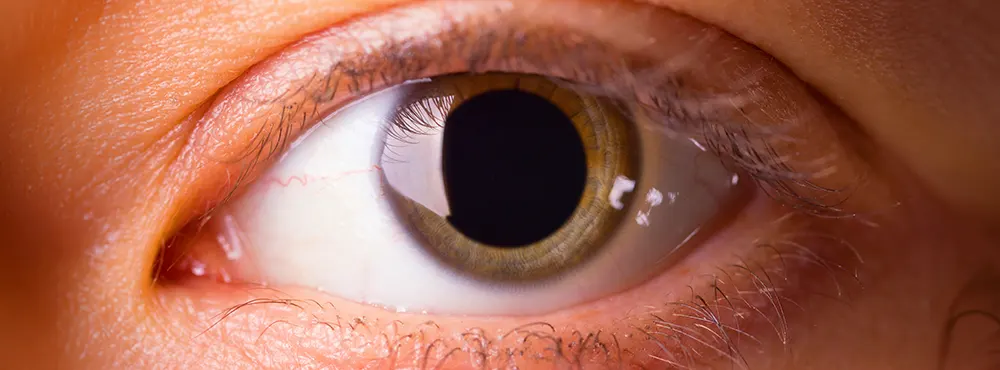
Have you noticed the black circles in the centre of your eyes changing size? Those circles are called pupils. They play a vital role in eye health. The pupil controls how much light enters your eye, helping you see clearly in different lighting conditions.
Pupil size is controlled by the colourful part of the eye(iris). Tiny muscles in the iris adjust pupil size depending on light, letting the right amount reach your retina.
Under normal conditions, pupils:
- Get smaller in bright light
- Get larger in dim light
However, sometimes it becomes larger and does not react properly to light and that’s when it becomes an eye condition. Although harmless, it may indicate an underlying medical condition. Read on to learn all about mydriasis, its causes and treatments.
- What is Mydriasis?
- What causes Mydriasis?
- When to see a doctor?
- How are dilated pupils treated?
- Frequently Asked Questions
What is Mydriasis?
In medical terminology, mydriasis refers to a dilated pupil that does not react to light. It is also known as ‘fixed pupil’.
What causes Mydriasis?
There is a broad range of factors which cause dilated pupils, including:
1. Common causes
In many cases, dilated pupils are a normal reaction and nothing to worry about. Some of the most common causes include:
- Low light conditions
- Mydriatics (eye drops) used during an eye exam
- Excitement, fear or stress
- Shift in focus
2. Medications
Medications can affect how our pupils respond to light, causing them to dilate. Medications that cause dilated pupils include:
- Antihistamines
- Decongestants
- Tricyclic antidepressants
- Motion sickness medicine
- Anti-nausea medicines
- Anti-seizure drug
- Parkinson's disease medications
- Medications containing botulinum toxin
- Atropine
3. Eye injuries
Certain eye disease or damage can also cause the pupils to dilate abnormally. These include:
- Eye trauma or injury
- Inflammation within the eye
- Migraines
4. Diseases and brain injuries
Diseases or brain injuries such as a tumour or a stroke can affect how our pupils react to light. This may cause dilated pupils in one or both eyes.
5. Neurological issues
Neurological conditions such as Anisocoria can disrupt the signals that control pupil size. This causes one pupil to appear larger than normal and slow to respond to light.
6. Drug use
Usage of certain drugs can cause dilated pupils and slow down their reaction to light. These include:
- Cocaine
- Amphetamines
- LSD
- Ecstasy
7. Congenital aniridia
A rare, mostly genetic, condition where the iris is partially or completely absent, resulting in a large pupil and sensitivity to light. This condition usually affects both eyes.
8. Benign episodic unilateral mydriasis
A harmless condition that can cause spontaneous pupil dilation in one eye. This temporary condition often occurs along with headaches, light sensitivity and blurry vision.
No matter the cause, if pupil dilation lasts for a long period, it is important to see an optician or GP to rule out serious eye conditions.
When to see a doctor?
While dilated pupils are usually nothing to be concerned about, they can sometimes indicate a more severe condition - such as a torn retina, an eye tumour or a life-threatening condition.
If you notice dilated pupils after you've had head trauma or are experiencing symptoms of a stroke, including dizziness, confusion, blurry vision and headaches, you should see your doctor immediately.
How are dilated pupils treated?
In most situations, dilated pupils return to normal on their own without any treatment. However, for those who seek medical help, the type of treatment depends on its underlying cause.
- If caused by lighting, move to a brighter or darker environment
- Drug-related dilation may improve once the substance is stopped
- Eye injuries or chemical exposure require urgent medical care
- Chronic or persistent dilation may be managed with prescribed eye drops or protective glasses
In rare cases, surgery may be needed to repair nerve or eye damage.
Frequently Asked Questions
Can stress or emotions cause dilated pupils?
Yes. Excitement, fear or stress can temporarily make your pupils appear larger.
Is pupil dilation dangerous?
No, in most situations, pupil dilation is not considered as dangerous. Normal light or emotional responses are harmless. However, persistent or uneven dilation may indicate a problem.
Will it go away on its own?
When the pupil dilation is normal, it is often temporary and resolves without treatment. However, if it persists, you should have it checked.
Do dilated pupils affect vision?
Yes, dilated pupils affect your vision. They often cause blurry vision, increased light sensitivity and difficulty focusing.